
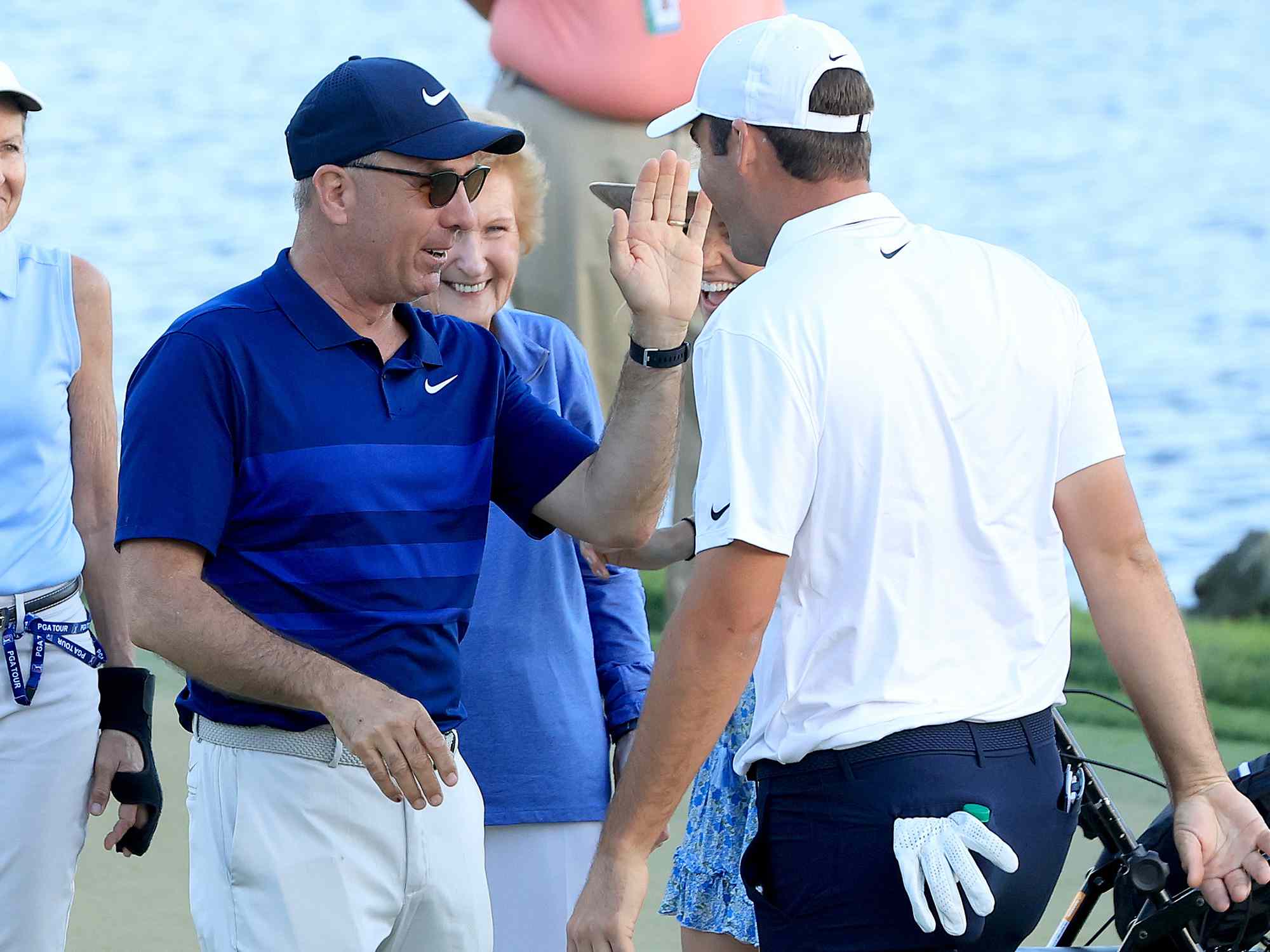
After watching Scottie Scheffler win his first PGA Championship major I noticed something very specific. It is likely I noticed this because of my work as a counselor and performance consultant. What stood out to me when Scottie was being congratulated by his family was the specific words used by his Dad. I want this example to set the stage for the importance a parents can have over the mindset and performance of their child. When Scottie embraced his Dad after achieving such a monumental accomplishment Scott Scheffler said:
“Words can’t describe what we just watched, you are the toughest guy. You’re the sweetest boy. I am so proud of your effort. Thank you for never giving up Scottie.”
I will come back to this later on why this stood out to me so glaringly. Yes, Scottie Scheffler is 28 years old, but seems to me he has been and continues to be reinforced with the right messages from his parents.
If you’re reading this, it is likely you are the parent of an athlete. Regardless of age or sport, everything you read today can apply for the betterment of your child. First note I want to make is I am sure you are doing a wonderful job as a parent and sports parent. Very rarely do I ever meet with a parent who doesn’t mean well, provides support and tries their best to help their kids though the ups and downs of sport. This blog is not intended to shame, fault or criticize any parent. Oftentimes after I speak with parents or present to parents I will hear comments such as “I’ve been doing it so wrong.” You have not done anything “wrong.” Not many parents have the time, understanding or resources it takes to know the information and even so be able to apply it in real life situations. The fact you’re taking the time out of your busy schedules to read this shows you are making the steps in the right direction. The vulnerability to admit you might not always be perfect or admit there might be a better way is the first and most crucial step to change. SO LET’S GET STARTED!!
- “Keep your head up, you did great!”
- “Don’t be so hard on yourself”
- “Don’t be nervous, you got this”
- “Just go out there and have fun”
Have you heard or said any of these statements before? I am guessing you have. While they seem well intentioned and harmless, many of these statements are actually reinforcing the brain to play out of anxiety, anger, and lose confidence.
Before we go any further I want to first be clear on some statements parents might say out of frustration or anger which certainly contribute to fear, quitting, anger, and self-criticism.
If you have been guilty of saying any of these quotes before you’re not alone. This blog is about change and improvement, not criticism!
- “What happened out there?”
- “You weren’t doing anything you and your coach are working on”
- “You just get in your own head and I wish you didn’t”
- “You’re better than that and I expect to see improvement”
- “Maybe you just need to work harder and not spend so much time on your phone”
I have a few more where these came from, but I am assuming you get the point. Here’s my advice on these. STOP. I know you spend money, time, and effort doing what you hope will help your kids improve and when you see poor performance it can be frustrating and feel like a waste of time and resources. I promise you whatever you’re feeling, your kids are feeling it too or worse. They tell me all the time, “Mom and Dad don’t think I care or try hard enough, but I do and I wish they knew that.” Next time you’re finding the urge to be slightly passive aggressive in the car, on the field, course, house or wherever, remember this only breaks your kids spirit, grit, growth and love of the game and relationship with you.
Now, let’s get back to what you can be doing as a parent. Outside of unconditional love and support your role as a sports parent is to foster a growth mindset, resiliency, intrinsic motivation, and good character. I will get back to how Scott Scheffler reinforced this from the quote at the beginning a little later. Our tendency as parents is to either praise good performance, save after a bad performance or help your kids get out of discomfort. Examples again:
- “Keep your head up, you did great!”
- “Don’t be so hard on yourself”
- “Don’t be nervous, you got this”
- “Just go out there and have fun”
It makes sense and 99 percent of parents do this, but there are better options. Here is my favorite quote in parenting psychology, “How and what you give feedback to will ultimately be what the child identifies with.” Here are the four aspects I want you to give feedback to:
- Actions
- Choices
- Focus
- Effort
These four examples are always available to the athlete and always in their control. Outcomes, talents, failures, thoughts and emotions are not. These change all the time. We can’t control these but we can influence them.
For example, if your child hits a game winning home run and you say “What a superstar you are!” This is feeding the idea to the child’s brain that “I am a star.” Nothing wrong with this until the day they start underperforming and now they feel they can no longer prove their “stardom” which as you can imagine creates anxiety, anger, and loss of enjoyment. On the flip side you can focus on giving feedback to a choice or action here. Instead of telling them they’re a star you can tell them “I am impressed how you choose to swing the bat with freedom in such a big part of the game!” This is signaling to the brain that success was more so a result from choices and actions and not talent and ability. Why is this important? Performance research clearly states that athletes who perform well and make it to higher levels do so because of their efforts, actions, choices, and ability to focus on the present moment along with their innate talent.
An example from a bad performance? Your child strikes out instead of hitting that home run. “Don’t be so hard on yourself” or “You had a great game beside the last at bat” again are well intentioned, but tend to invalidate the experience of the athlete. A better response would be “hey, I know it didn’t end how you hoped and that stinks (Validating), and I am also proud of how you choose to respond in such a challenging time.” This parent is giving feedback to a choice and action of the child accepting defeat with grace and sportsmanship. Why is this important? Because making the kid feel better in the moment stunt their development, but feeding the idea how being resilient and composed is important is likely what the child brain will focus on again in the future when another challenging situation plays out.
Here is Scott Scheffler quote one more time:
“Words can’t describe what we just watched, you are the toughest guy. You’re the sweetest boy. I am so proud of your effort. Thank you for never giving up Scottie.”
You might notice something new now after reading this blog. Did you compliment his son on the win? No. Did he tell him on great, talented or say one word about golf? No. All he gave feedback to was actions, choices, focus on effort.
- “Toughest guy”- Choice-He choose resilience when the game got tough this day
- “Sweetest boy”- Action- he choose grace when competing
- “Proud of your effort”- Effort
- “Never giving up”- Choice and action again
Is Scottie Scheffler talented? Absolutely. However, Scottie is not held back or identifies with outcomes and rewards, he is motivated and moved by his controllable choices. These two factors together create a power mix for the top player in the world.
If you found this helpful and want more ideas and tips head to my website, find resources and download my free Sports Parenting Reference Guide. I have six helpful ways to improve as a sports parent. I also work with parents one on one to help them influence their child’s performance and improve their relationships.